Kollam District
Kollam is a land where history, culture, tradition, and natural beauty come together in harmony. With a rich heritage shaped by centuries of history, the district reflects the unique character and cultural identity of Kerala through its historic landmarks, traditional art forms, temples, festivals, local customs, and vibrant community life.From ancient traditions and architectural treasures to colourful celebrations and age-old practices passed down through generations, Kollam preserves a strong connection with its cultural roots. The district’s beautiful landscapes, backwaters, historic places, traditional industries, and welcoming communities add to its distinctive charm.
KollamDistrict Overview
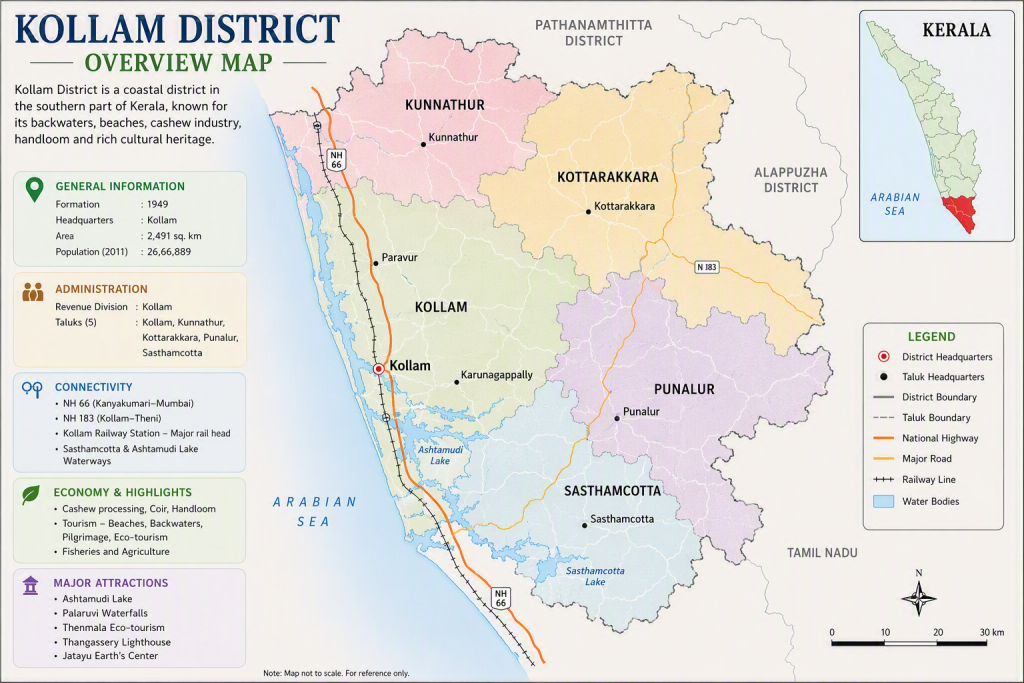
Kollam District, located in the southern part of Kerala, is a region known for its rich heritage, vibrant culture, scenic landscapes, and strong traditions. The district beautifully combines historic landmarks, traditional art forms, temples, festivals, backwaters, beaches, and diverse local communities. Kollam has a long-standing connection with trade, culture, and maritime activities. Its heritage can be experienced through historic sites, traditional industries, cultural celebrations, and places of religious and architectural importance. The district is also renowned for its natural beauty, including serene backwaters, lush surroundings, waterways, and coastal landscapes. Kollam continues to embrace modern development while protecting the values, traditions, and heritage that have shaped its identity. It stands as a place where the stories of the past, the traditions of the present, and the aspirations of the future come together—making Kollam a memorable destination of heritage, culture, and timeless traditions.Kollam proudly preserves its rich heritage through its historic places, traditional practices, cultural.
Vibrant kollam – History, Culture, Nature and Development
History of Kollam
Kollam has a rich and fascinating history shaped by centuries of trade, culture, maritime connections, and local traditions. Once known as Quilon, the region was an important centre of commerce and maintained trading links with places across Asia and beyond.
Culture of Kollam
Kollam is known for its vibrant cultural heritage, traditional art forms, colourful festivals, and strong community traditions. The district reflects the diverse cultural identity of Kerala through its temples, places of worship, folk traditions, music, dance, handicrafts, and local.
Nature of Kollam
Kollam is blessed with a diverse natural landscape that brings together backwaters, beaches, rivers, forests, hills, wetlands, and lush green surroundings. Its scenic waterways and peaceful coastal areas offer a refreshing connection with nature, while its countryside.
Development of Kollam
Kollam is steadily progressing through improvements in infrastructure, connectivity, tourism, education, healthcare, technology, and public services. The district continues to build on its traditional strengths while creating new opportunities for communities.
Kollam District – Facts & Figures
26,35,375
2,635,375

Malayalam, English,Tamil, Hindi

₹1.19 Lakh Crore
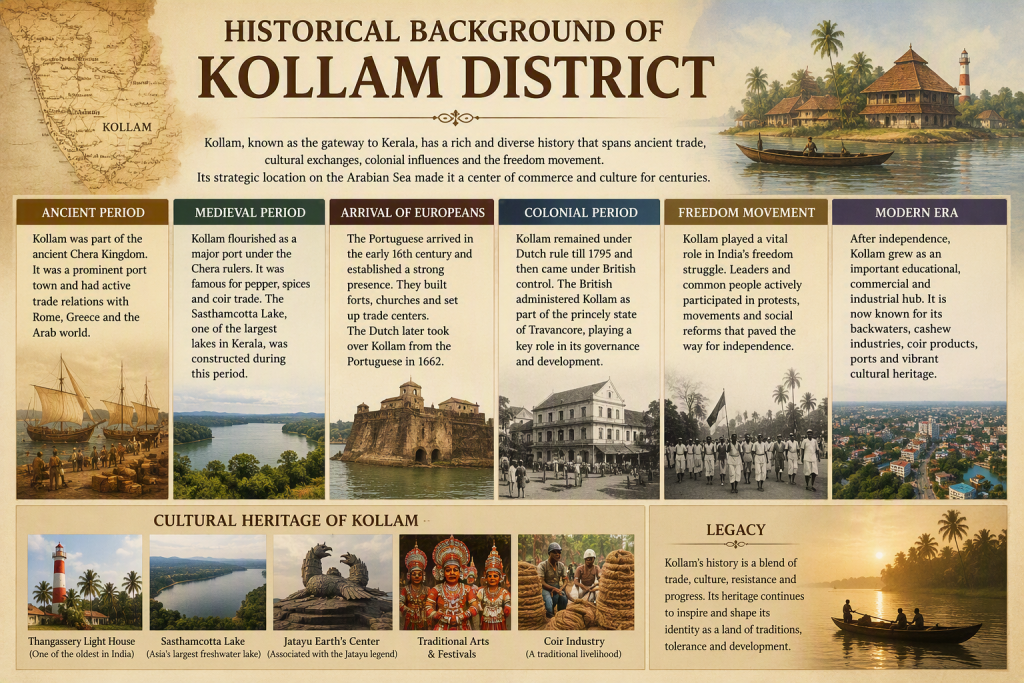
Historical Background of Kollam District
Kollam has a rich and centuries-old history shaped by maritime trade, cultural exchange, regional kingdoms, and traditional industries. Historically known as Quilon, Kollam grew as an important port and commercial centre, connecting Kerala with traders and travellers from different parts of Asia and Europe.
The region was closely associated with the historic Venad kingdom and later became an important part of the Travancore region. Its strategic coastal location and waterways supported trade, transportation, and the movement of people and goods.
Kollam’s historical legacy can be seen in its ancient temples, churches, traditional architecture, historic settlements, festivals, and long-established industries. The district’s connection with the sea and inland waterways has played an important role in shaping its economy and cultural identity.
Live Weather Updates
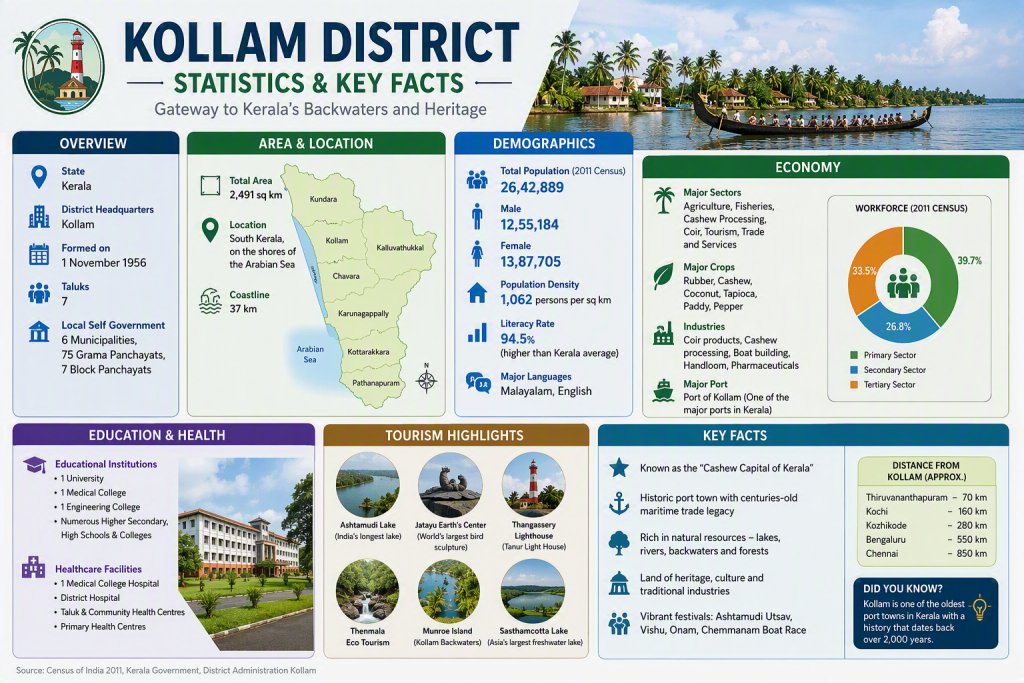
Kollam District – Statistics & Key Facts
District: Kollam
State: Kerala Headquarters: Kollam
Area: 2,491 sq. km
Population: 26,29,703
Literacy Rate: 94.09%
Revenue Divisions: 2 Taluks: 6
Sex Ratio: 1,113 females per 1,000 males
District Area-2,491 sq. km
Population-26,29,703Literacy Rate-94.09%
Child Population (0–6 years)-2,38,062
Literate Population-22,42,757
Villages-105 Climate Tropical
Annual Rainfall 270 cm
Mean Maximum Temperature-36°C
Mean Minimum Temperature-22.4°C
Frequently Asked Questions
Kollam District is located in the southern part of Kerala, along the Arabian Sea coast.
The district headquarters is Kollam city.
Kollam is known for its backwaters, beaches, historic port, cashew industry, traditional culture, and natural beauty.
Kollam was historically known as Quilon and developed as an important centre of maritime trade.
Popular attractions include Ashtamudi Lake, Kollam Beach, Thenmala, Thangassery, Munroe Island, and Jatayu Earth’s Center.